Interest and Intent: A Gradual Erosion
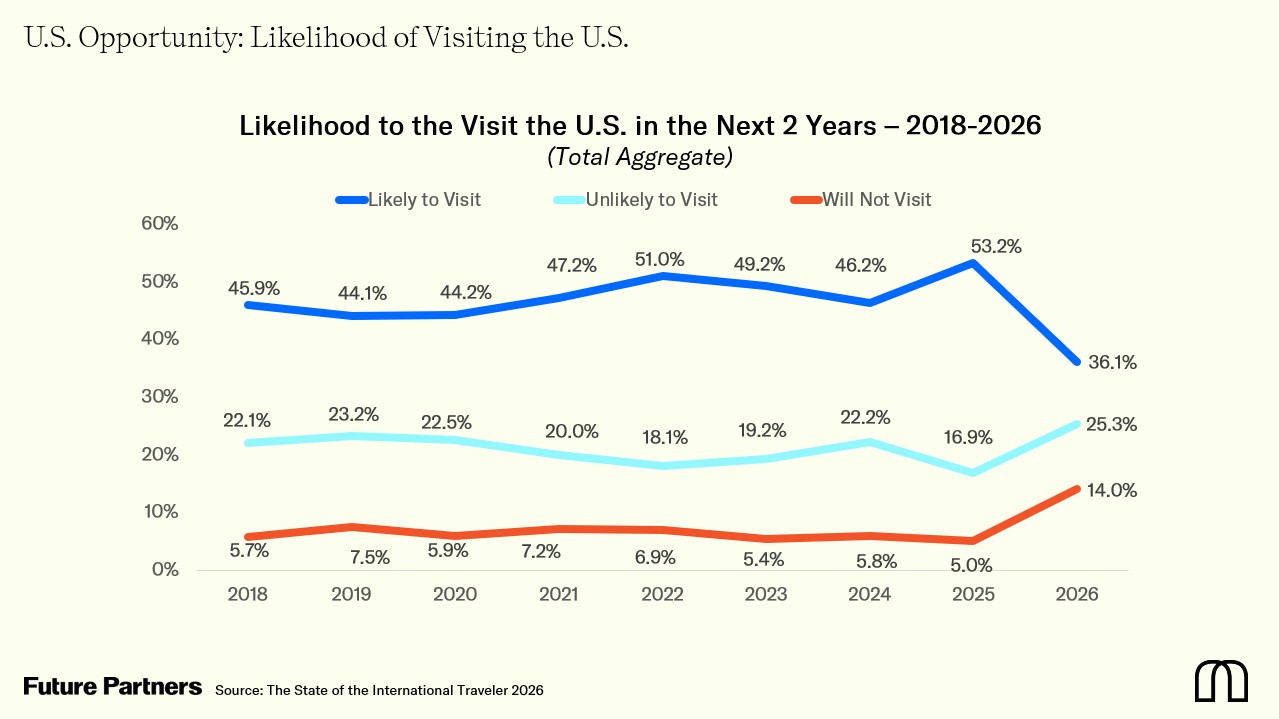
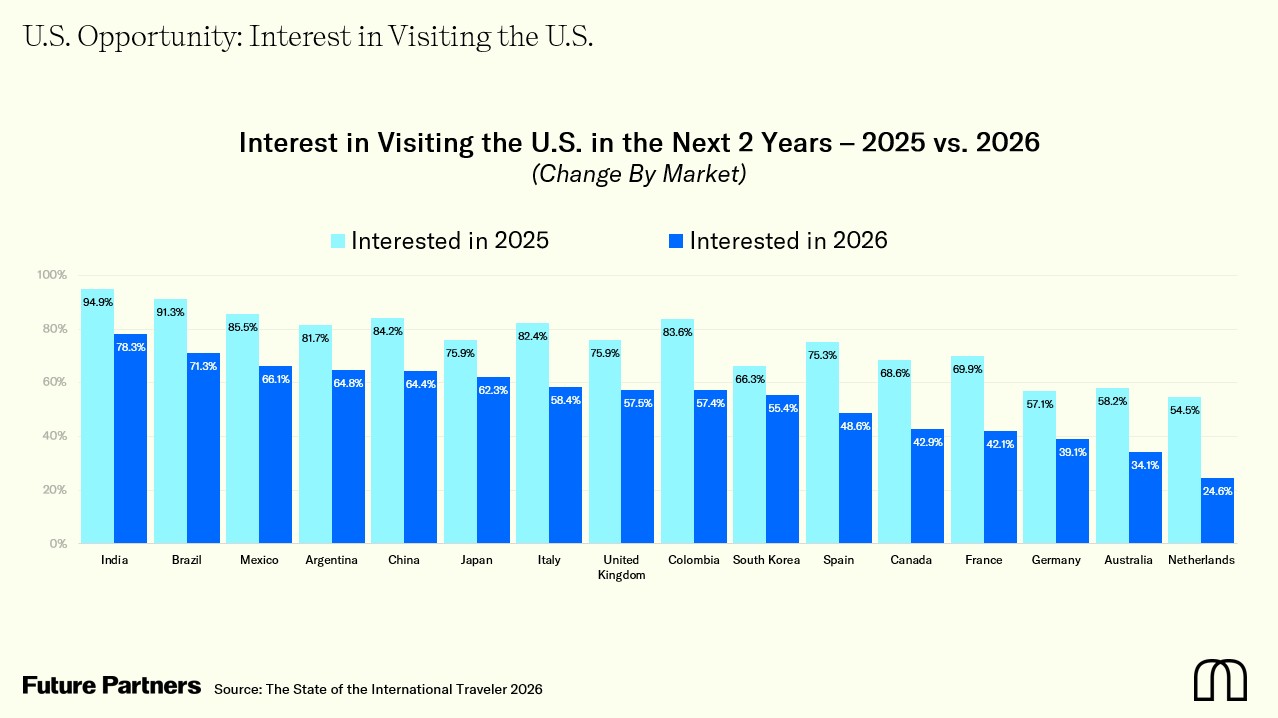
Across global feeder markets, both interest in and likelihood of visiting the U.S. show signs of softening.
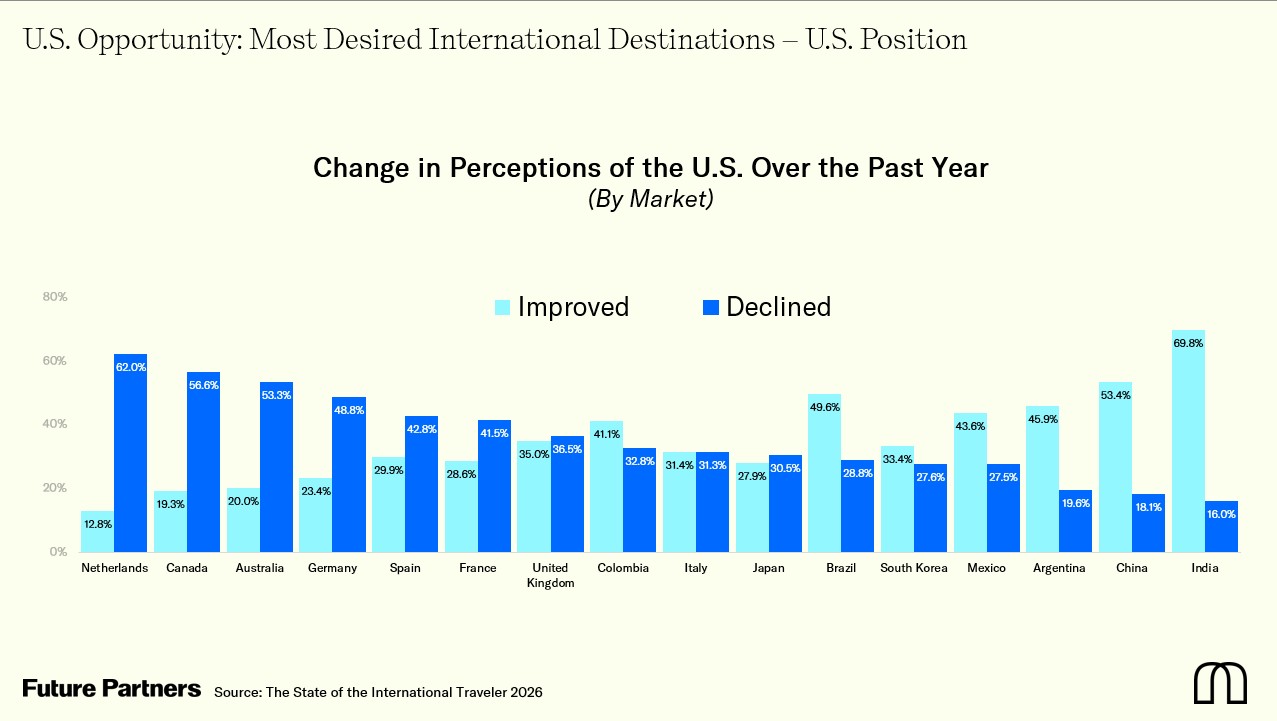
While the U.S. remains a highly visible destination, its relative position among the world’s most desired international destinations has weakened. Several markets report declining perceptions of the U.S. over the past year, signaling that familiarity alone is no longer enough to sustain demand.
This matters because today’s global travelers are more selective. Rising costs, geopolitical uncertainty, and expanding destination choice mean travelers are actively filtering destinations, not aspirationally bookmarking them.
Policy Friction Is Becoming Brand Friction
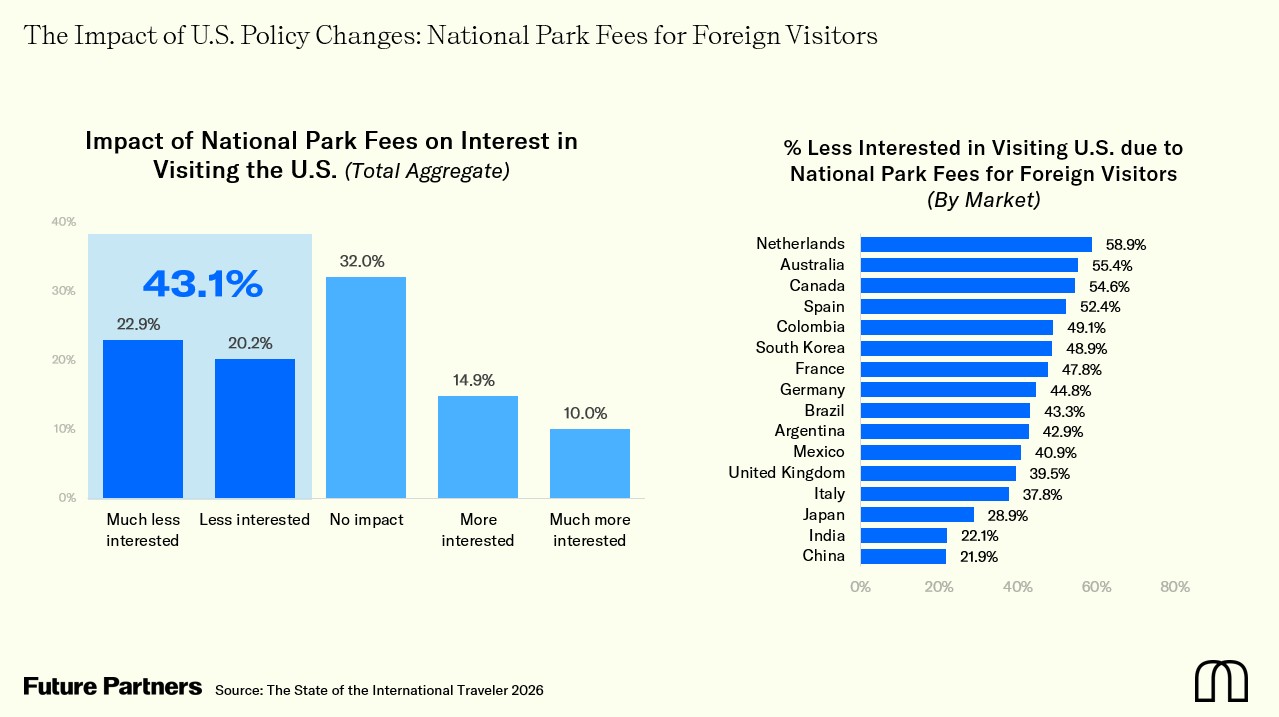
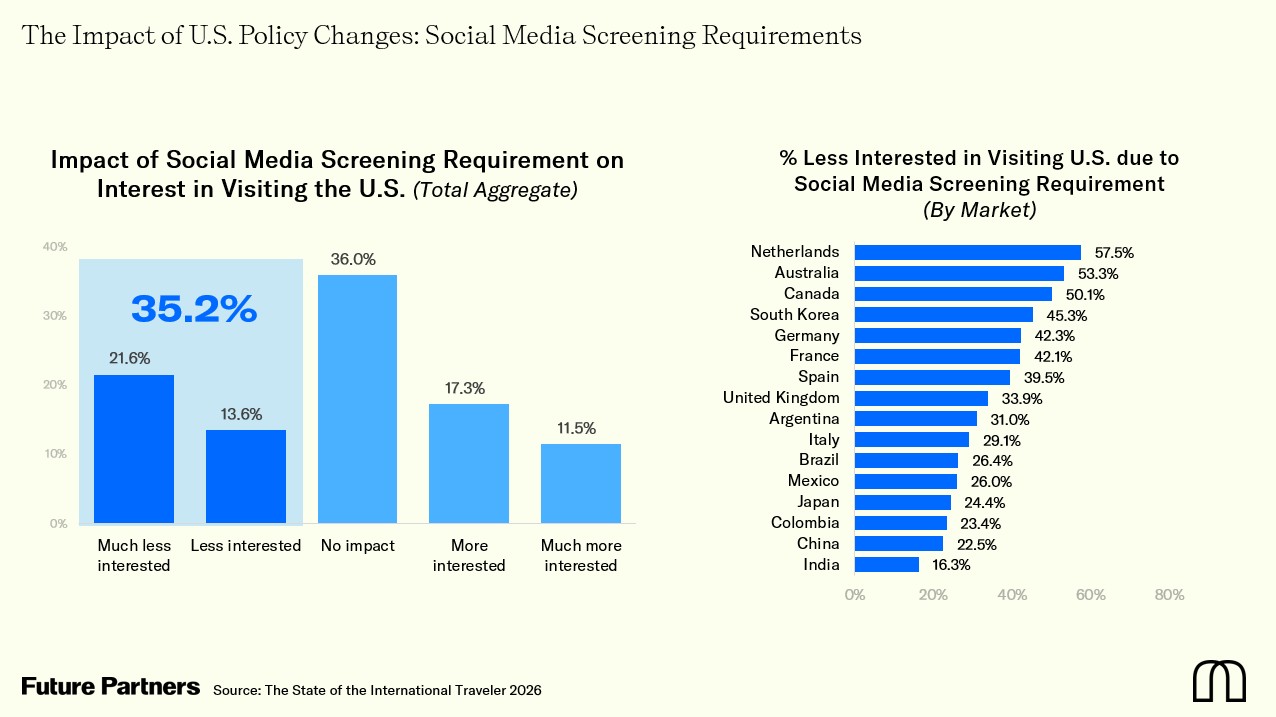
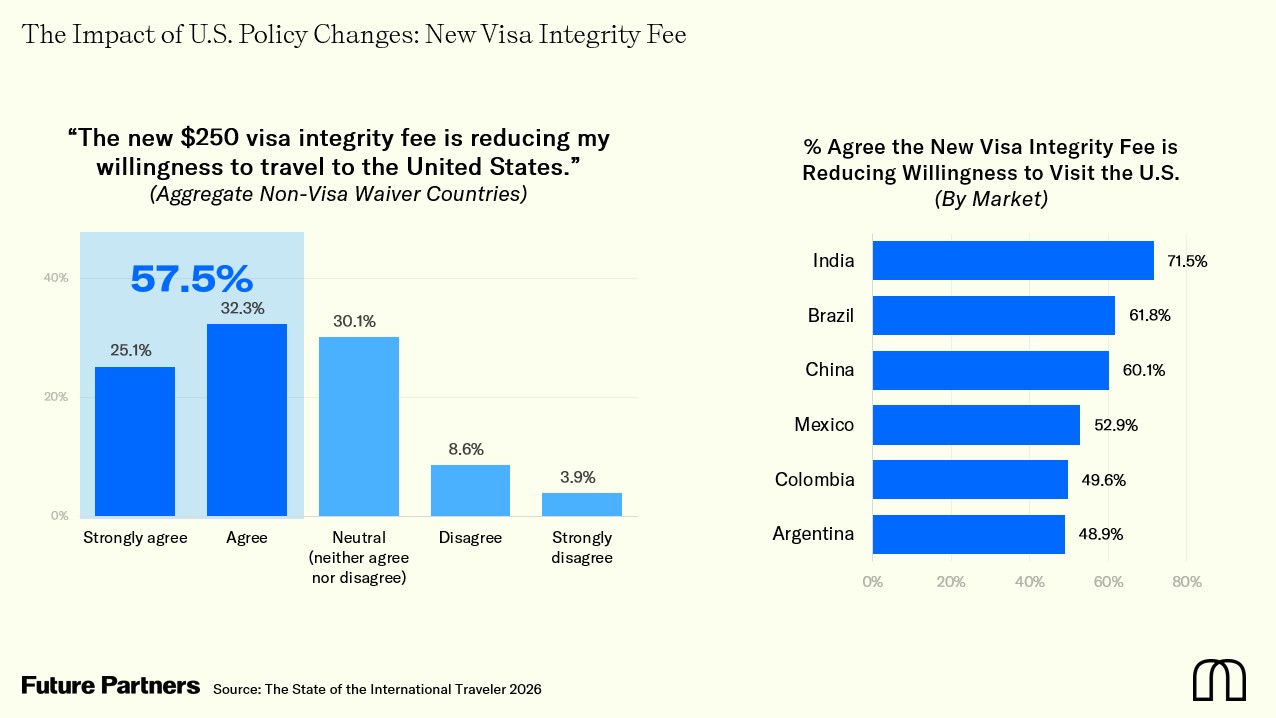
Perhaps most notable in the findings is the cumulative impact of U.S. policy decisions on traveler sentiment. What were once considered administrative or operational changes are now materially influencing destination choice.
In a global context where competing destinations are streamlining entry, expanding visa-free access, and messaging openness, these policies reinforce a perception of friction, scrutiny, and added cost; attributes that work against the U.S. brand promise of welcome and freedom.
Why Fresh Insights Matter More Than Ever
The implications for international marketing strategy are clear. Relying on historical performance, legacy brand strength, or broad “always-on” messaging is increasingly risky. The travelers still open to visiting the U.S. are fewer, more discerning, and more sensitive to both value and values.
The U.S. still has extraordinary experiential equity but converting that equity into visits now demands fresher insights, tighter strategies, and a willingness to confront uncomfortable realities shaping global perception.
Join us for a deeper dive into global traveler sentiment and an examination of how U.S. travel brands can still gain a competitive edge in a volatile global landscape.
The State of the International Traveler Webinar
🗓️ Thursday, February 26th at 3pm ET